Why soil testing should come before planting
A piece of land may look fertile, support natural vegetation or have produced good crops in the past. However, appearances alone cannot tell you whether the soil is suitable for the crop you intend to grow.
Before investing in seeds, seedlings, fertilizers, irrigation, labour and other farm operations, it is important to understand the soil. A soil test provides information that helps you make informed decisions before committing money to production.
At RonaGrow Limited, we believe successful farming starts with good decisions. Soil testing is one practical step farmers and agricultural investors can take to reduce avoidable risks and plan production more effectively.
What does a soil test tell you?
Depending on the tests requested, a laboratory analysis may provide information about soil pH, selected nutrient levels, organic matter, salinity and other limitations. These results help guide decisions about soil amendments, fertilizer requirements and crop suitability.
The report should be interpreted alongside the crop’s needs, field conditions and other relevant agronomic information. A soil test is useful, but it does not assess every factor that determines whether a farm will succeed.
Why test your soil before choosing a crop?
Assess crop suitability: Different crops have different soil requirements. Soil analysis helps assess whether the land is a reasonable starting point for your intended crop or whether corrective measures may be needed. Climate, drainage, water availability, topography, pests, disease history and market access must also be considered.
Make better fertilizer decisions: Applying fertilizer without understanding the soil can lead to unnecessary expenditure, nutrient imbalances or failure to address the actual limitation. Recommendations should consider the crop, growth stage, expected yield, irrigation practices and other nutrient sources, including manure.
Estimate land-preparation costs: A report may reveal a need for lime, specific nutrients or other corrective measures. These interventions affect the cost and feasibility of production. In some cases, selecting a different crop or field may be more economical.
Establish a baseline: Keeping soil reports allows you to compare results over time and evaluate how your soil management practices are performing.
How should a farmer collect a soil sample?
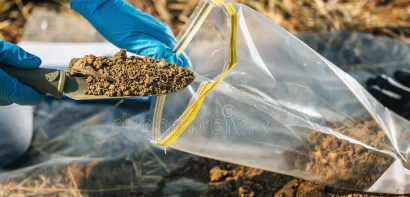
Divide the farm into reasonably uniform sampling areas. Fields with different soil types, slopes, management histories or crop performance may need separate samples. Follow the laboratory’s instructions for sampling depth and collection method.
Collect subsamples from representative points and combine them as instructed. Avoid including unusual spots such as manure heaps, fertilizer spills or field edges in a general field sample; sample problem areas separately if investigation is needed. Label the sample and record the field, intended crop and relevant field history.
The accuracy of a laboratory report depends partly on how the sample is collected. If you are unsure, seek guidance from a qualified agronomist or the laboratory conducting the analysis.
A soil test is only one part of land assessment
A good soil report does not automatically mean a farm will succeed. Also evaluate water availability and reliability, drainage and waterlogging risk, local climate, labour and input costs, irrigation infrastructure, target markets, buyer requirements, transport and expected returns.
For commercial farming, agronomic suitability and business feasibility must be considered together. The land must support the crop, and the production plan must make financial and market sense.
Make your next farming decision with better information
Choosing what to grow has long-term implications for costs, production performance and potential returns. Soil testing helps replace assumptions with useful information and gives you a stronger foundation for planning.
RonaGrow Limited supports farmers and agricultural investors through agronomy consultancy, farm management and practical production planning. If you are preparing land for horticultural production, contact us to discuss your farm assessment and agronomy support needs.
RonaGrow Limited — From Soil With Care.